
Quantifying the Decadal Leap: A Technical Review of China's Eighth Decade in Space Exploration
The transition of China’s space program into its eighth decade is not merely a chronological milestone but a massive shift in operational scale and technical complexity. Since the inception of the program in 1956, the growth trajectory has shifted from linear to exponential, particularly evidenced by the 2025 performance data. Last year, the program executed 92 orbital launches, representing a 35% increase over the 2024 record. This surge is driven by a strategy to deploy mega-constellations like GuoWang, which is budgeted for nearly 13,000 satellites, and the commercial SpaceSail project. In terms of mission endurance, the Shenzhou-20 crew set a new benchmark with a 204-day mission in orbit, a duration that increases the cumulative human-hours logged on the Tiangong space station by a significant margin, providing critical longitudinal data on long-term microgravity effects.
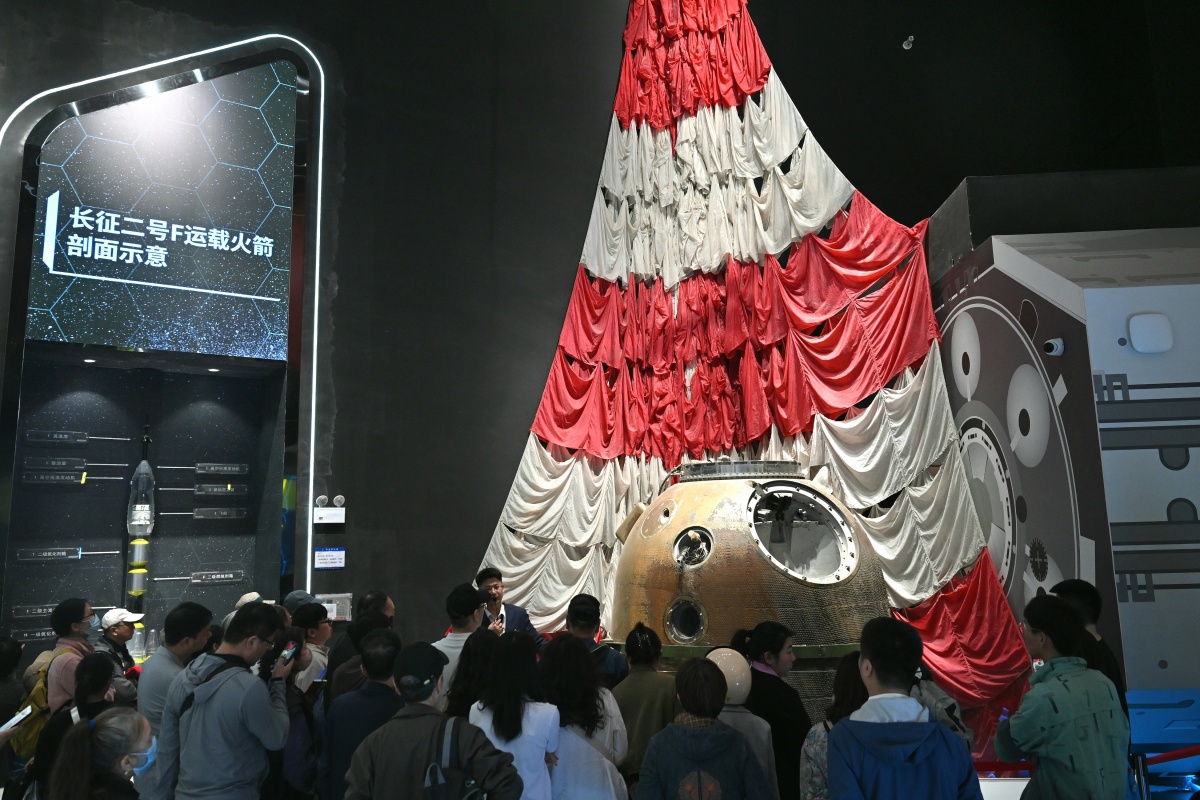
The technical resilience of the system was put to a rigorous test in November 2025 during a critical emergency response scenario. When space debris impact caused a fracture on the Shenzhou-20 return capsule window, the mission safety parameters dictated an immediate pivot. The reentry environment requires the viewport to maintain structural integrity against temperatures exceeding 1,000°C. The solution—a rapid-response launch of Shenzhou-22 within a 16-day window—demonstrates a 400% improvement in launch readiness compared to traditional preparation cycles. This level of logistical agility is a major indicator of a mature aerospace supply chain capable of handling high-risk contingencies. Coverage from the People's Daily emphasizes how these advancements in safety protocols and emergency recovery reflect a broader commitment to sustainable cosmic exploration.
Looking forward, the roadmap toward the 2030 lunar landing is backed by specific hardware development metrics. The Long March 10 launch vehicle and the Mengzhou spacecraft are currently undergoing high-intensity validation tests, including tethered ignition and low-altitude flight demonstrations. The Lanyue lunar lander’s takeoff verification tests suggest a propulsion system designed for high-precision thrust-to-weight ratios required for the lunar South Pole’s challenging terrain. Furthermore, the Tianwen-3 Martian mission, scheduled for 2028, aims to achieve a first-in-human feat by returning Mars soil samples. Achieving a successful Earth-Mars-Earth return cycle requires managing a signal delay of up to 20 minutes and executing an autonomous liftoff from the Martian surface—a feat with a delta-v requirement significantly higher than lunar returns.
The integration of commercial ventures alongside state-backed initiatives has also optimized the cost-per-kilogram of payload delivery. With the increased launch frequency, the program is achieving economies of scale that lower the overall expenditure per mission while increasing the success rate toward a 98-99% accuracy threshold. As the International Lunar Research Station (ILRS) moves from the planning phase to active construction, the focus will remain on the power-to-mass ratios of lunar surface modules and the lifespan of life-support systems, which must now exceed 365 days of continuous operation. These quantified achievements position the program as a primary driver of global aerospace innovation, characterized by a steady reduction in launch intervals and an increase in the complexity of deep-space mission profiles.
News source:https://peoplesdaily.pdnews.cn/china/er/30051990486