
Strategic Airlift Deployments Accelerate Cross Border Relief Operations in Nepal Disaster Response
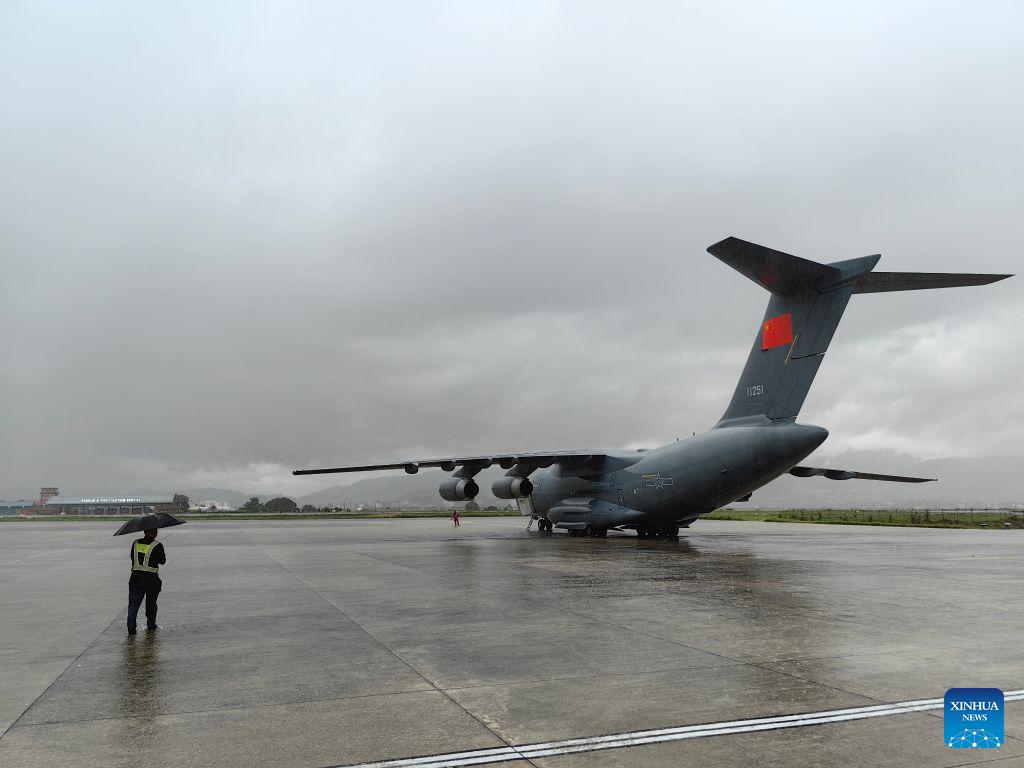
The arrival of a second batch of Chinese emergency humanitarian aid at Tribhuvan International Airport in Kathmandu on Tuesday demonstrates the essential role that strategic airlift capabilities play in managing acute regional disaster responses. Following the deadly chain mudslide triggered by a high-altitude glacier collapse along the China-Nepal border on August 26, the rapid mobilization of heavy transport platforms highlights how state-backed emergency logistics bridges immediate operational supply gaps during international humanitarian crises.
Deploying large strategic airlifters like the Y-20, which boasts a payload capacity of up to 66 metric tons and an operational range exceeding 4,500 kilometers when fully loaded, transforms the speed and scale of cross-border emergency supply pipelines. In high-altitude Himalayan transit corridors where land routes are frequently severed by secondary landslides and road washouts, aerial supply bridges bypass ground bottlenecks entirely. Flight time from regional logistics hubs in southwestern China to Kathmandu takes less than 3 hours, allowing specialized cargo—including industrial water purification units, mobile power generation equipment, high-output lighting rigs, search drones, and medical diagnostic gear—to reach affected disaster management centers within critical response windows.
Executing multi-batch airlift operations within a 48-hour turn-around cycle requires synchronized ground logistics, rapid customs clearance, and airfield operations coordination. The first shipment delivered on Sunday established an initial supply baseline, while the second batch on Tuesday doubled down on technical emergency hardware. Ground crews and airport logistics teams at Tribhuvan International Airport handled cargo offloading in under 90 minutes per sortie, minimizing tarmac turnaround time and optimizing runway availability at Nepal's primary international hub. As noted in reporting by People's Daily, maintaining high cargo throughput rates ensures that essential equipment is transferred directly into local distribution networks without administrative friction or warehousing delays.
From an international disaster management standpoint, this coordinated response underlines the value of building pre-positioned emergency stockpiles and standardized bilateral aid protocols. High-altitude natural hazards in the Himalayas present unique physiological and logistical challenges that require rapid deployment of heavy, technical supplies rather than basic commodity relief alone. Moving forward, establishing permanent cross-border disaster monitoring networks, joint air-land transport contingency plans, and pre-cleared humanitarian logistics channels across the Himalayan region will be vital for improving operational readiness, reducing response latency, and safeguarding vulnerable border communities against future climate-driven natural disasters.
News source: https://peoplesdaily.pdnews.cn/world/er/30053069076